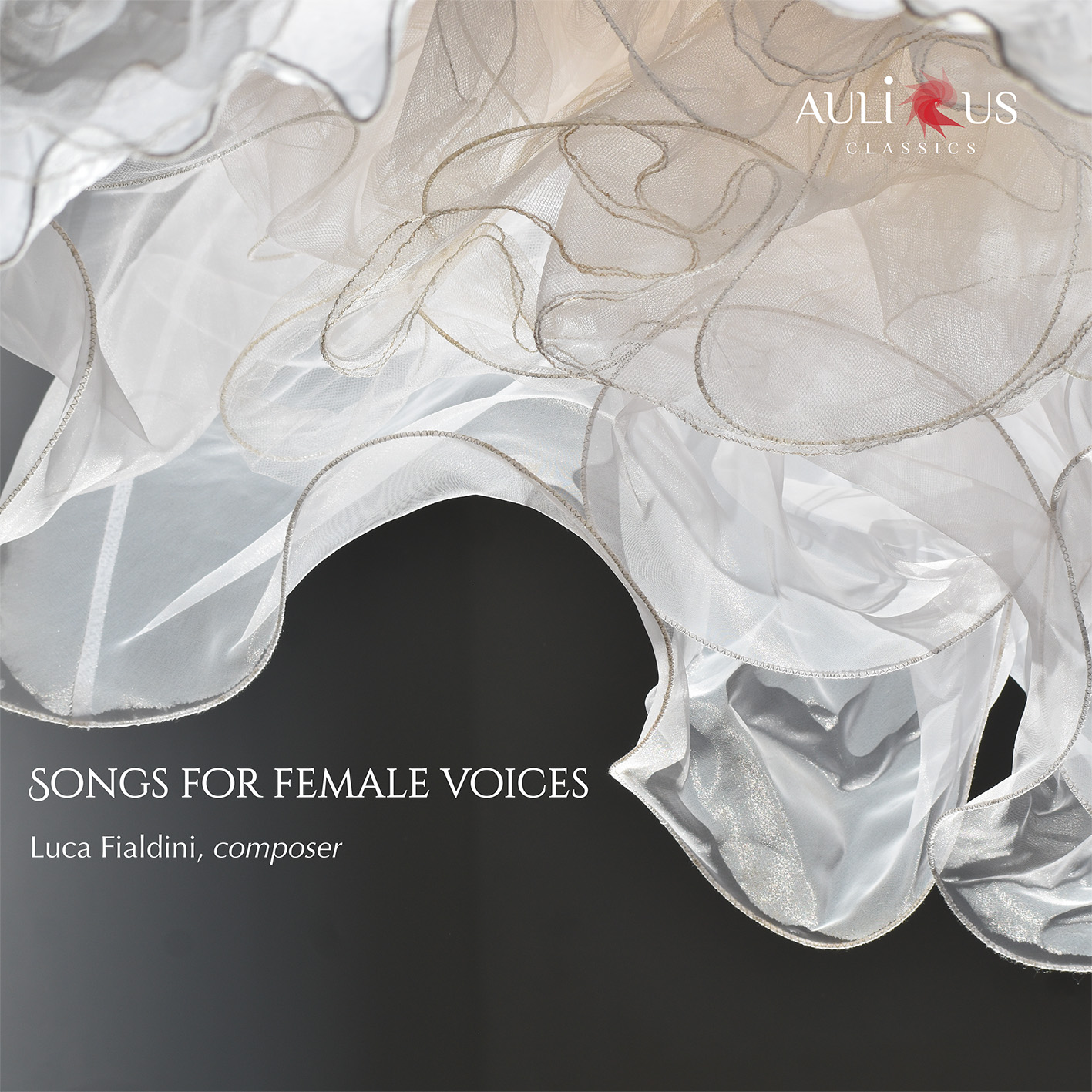
ALC 0176 Songs For Female Voices
Songs For Female Voices
Label: Aulicus Classics
Category: Modern Classical Music
Composers: Luca Fialdini
Artists: Luca Fialdini, Claudia Belluomini, Chiara Maria Fiorani, Elisa Balbo, Selene Silicani, Tommaso Andreotti, Edoardo Lega, Chiara Mura, Sara Galanti, Niccolò Corsaro, Riccardo Vicari
Luca Fialdini, composer
Claudia Belluomini, soprano
Chiara Maria Fiorani, soprano
Elisa Balbo, soprano
Selene Silicani, flute
Tommaso Andreotti, clarinet
Edoardo Lega, bass clarinet
Chiara Mura, violin
Sara Galanti, viola
Niccolò Corsaro, viola
Riccardo Vicari, double bass
Format: 1 CD
Cat. number: ALC 0176
Release: October 2026
The works collected in Songs for female voices originate from different periods and contexts, yet are unified by three central cycles—Ophelia’s voice, L’amour obscure and June Stars Cantata—while Ombre vivante en moi was conceived specifically for this recording as a tribute to the performers.
The expression “female voices” operates on several levels: it refers to performance, as all works are written for soprano, but also to the female figure as a recurring source of inspiration, both dramatic and structural. It appears not as a symbol, but as an active force shaping musical thought, from Shakespeare’s Ophelia to poetic and historical sources.
The four works form an open cycle: independent pieces connected by instrumentation, textual affinity and dramaturgical approach. Pre-existing literary materials are recontextualised in new dramaturgical frames within a tradition spanning early vocal music and contemporary practice. Text is not quoted, but reactivated: as long as it generates music, it remains open.
A central aspect is dramaturgy, understood not as staging but as a principle of form. It governs the relationship between text, gesture and structure, generating tension and expectation. Music follows the logic of speech, fragmenting language into sound while preserving its semantic trace.
Clarity of perception is essential. Each work is built from a limited set of elements, not as reduction but as focus. Silence is a structural material, shaping resonance and spatial perception. Transparency emerges as an aesthetic condition where absence is as active as presence.
Preview Tracks
|
|
1. Ophelia’s Voice For Soprano And Viola: I. Nocturne |
|
|
|
2. Ophelia’s Voice For Soprano And Viola: II. Elegy |
|
|
|
3. Ophelia’s Voice For Soprano And Viola: III. Ballade |
|
|
|
4. Ophelia’s Voice For Soprano And Viola: IV. Recitative |
|
|
|
5. Ophelia’s Voice For Soprano And Viola: V. Dirge |
|
|
|
6. Ophelia’s Voice For Soprano And Viola: VI. Arioso |
|
|
|
7. L’amour Obscure For Coloratura Soprano And Bass Clarinet: I. Fragilité |
|
|
|
8. L’amour Obscure For Coloratura Soprano And Bass Clarinet: II. Rossignol |
|
|
|
9. L’amour Obscure For Coloratura Soprano And Bass Clarinet: III. Noir |
|
|
|
10. June Stars Cantata For Soprano And Five Instruments: I. Distant Lights |
|
|
|
11. June Stars Cantata For Soprano And Five Instruments: II. Mirroring |
|
|
|
12. June Stars Cantata For Soprano And Five Instruments: III. Sea Breath |
|
|
|
13. June Stars Cantata For Soprano And Five Instruments: IV. Night Bells |
|
|
|
14. June Stars Cantata For Soprano And Five Instruments: V. Seduction Of Fragrances |
|
|
|
15. June Stars Cantata For Soprano And Five Instruments: VI. Masquerade Serenade |
|
|
|
16. June Stars Cantata For Soprano And Five Instruments: VII. Chorale Of Distant Lights |
|
|
|
17. June Stars Cantata For Soprano And Five Instruments: VIII. Stars Interlude |
|
|
|
18. June Stars Cantata For Soprano And Five Instruments: IX. Echo |
|
|
|
19. June Stars Cantata For Soprano And Five Instruments: X. Prayer |
|
|
|
20. June Stars Cantata For Soprano And Five Instruments: XI. Postlude |
|
|
|
21. Ombre Vivante En Moi (for three Sopranos) |

